
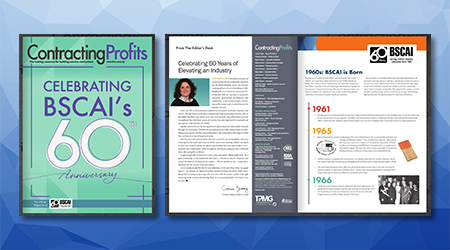
 Celebrating BSCAI's 60th Anniversary eBook
 Recognizing the 2026 Reader Choice Award Winners
 2026 Emerging Leader Award
 How Surfactant Use is Expanding in Commercial Cleaning
 Boost Cleaning Efficiency and Sustainability in Just 40 Minutes
 Case Studies & White Papers
Case studies & white papers for the cleaning professional
Management: CIMS Certification Upholding Varsity's Standard of Excellence
When your customer is spread across more than half of the United States, and your cleaning crews may be asked to work in one state today and another tomorrow, ensuring everyone in the organization is on the same page is necessary to make certain that service delivery remains consistent and a high performance level is maintained at each account’s
location.
That is exactly the challenge faced by Greg Hoch, regional manager of Varsity Contractors’ Ensign Division, based in Salt Lake City, which has a unique “territory.” His only client is the Church of Jesus Christ of Latter-day Saints, which has more than 400 stand-alone sites across the country. Each individual site requires daily service, as well as occasional project work, such as deep carpet cleaning, that is performed by more than 30 traveling service teams.
Given such day-to-day challenges, when Hoch was asked to participate on the Varsity Contractors’ team that would be responsible for preparing the organization to become the first building service contractor to certify to the new ISSA Cleaning Industry Management Standard (CIMS), he felt a bit of initial trepidation concerning what the task would entail. But, after reviewing CIMS and considering the process, he quickly saw great value in its benefit to his region.
“Because of the CIMS assessment, we were able to strengthen our standardization, and update policies that had evolved but might not have been on paper,” says Hoch, noting that the environmental and safety elements of CIMS were of particular interest given Varsity’s commitment to the environment as well as worker health and safety.
“From a risk management standpoint, we found a lot of areas where we could improve our overall communication by using email, regional meetings and training and saw great value in using such communication methods to filter information to front-line employees,” says Hoch. As a result of Varsity’s CIMS process, polices that were updated or documented are now available to all staff through the internal Varsity University Reference Center, and new practices are utilized, such as including safety tips with paychecks.
“It’s harder to identify the actual savings that flow from avoiding problems than it is to identify the direct benefits associated with reducing existing ones, because you don’t know what would have happened,” says Hoch. “But we like to think that the increased awareness and our effort in improving our risk management methods will pay short- and long-term dividends by even further minimizing the chances that something could happen in our operations.”
The process of complying with CIMS and working to achieve certification also proved valuable to Tyson Lee, support center manager at Varsity, and the person responsible for leading the Varsity team. “It was good for me, as a person who manages a central communication hub for the entire company, to see where the rubber meets the road in operations after we’ve set and communicated policies.”
What Lee discovered was that after policies and procedures are defined, management can benefit greatly from investigating how information is filtered through the entire organization and analyzing whether the decisions made are effective.
“I realized that we can do things differently in some areas at the corporate level to help operations best implement the directives we’ve set. You truly need effective communication across all organizational boundaries for a company to be successful and well managed.”