
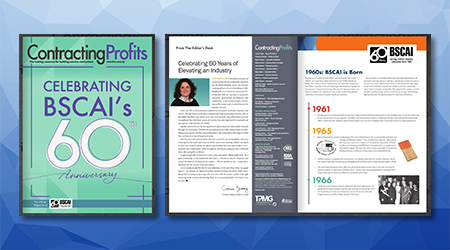
 Celebrating BSCAI's 60th Anniversary eBook
 Recognizing the 2026 Reader Choice Award Winners
 2026 Emerging Leader Award
 How Surfactant Use is Expanding in Commercial Cleaning
 Boost Cleaning Efficiency and Sustainability in Just 40 Minutes
 Case Studies & White Papers
Case studies & white papers for the cleaning professional
10 Tips for Planning an Accessible Restroom
Over the years many stakeholders in the public and private sectors have had their hand in establishing minimum accessibility standards for people with disabilities in public buildings. One of the most important spaces in any building is the restroom. Without having a restroom that is compliant with applicable accessibility standards such as the Americans with Disabilities Act (ADA), buildings are vulnerable to being cited since the ADA is a federal civil rights law under the jurisdiction of the U.S. Department of Justice. Most local building codes also carry accessibility requirements, usually referencing ANSI A 117.1. As we all know, local permitting and certificates of occupancy require review and approvals that include restrooms. A building cannot be opened to the public without accessible restrooms.
Making sense of accessibility standards has been a daunting challenge for the commercial architectural and design community, and developers, and property management. As a service to the community, Bobrick and our expert accessibility consultants present 10 important considerations for planning an accessible restroom.
1. Entrances and exits are laid out to minimize congestion and for universal access;
2. Passageways and access aisles are at least 42 inches – 48 inches wide;
3. Limit protrusions between 27 inches and 80 inches all circulation routes, passageways and access aisles to no more than 4 inches;
4. Wheelchair turning spaces wherever required. The increased use of large wheelchairs chairs and scooters means that larger maneuvering spaces should be considered;
5. Accessories are fully recessed into the walls wherever possible;
6. Make sure accessories and vendors, faucets, and flush valves meet or exceeds 2010 ADA and 2009 ICC/ANSI standards (are reachable and usable with limited hand dexterity and don’t require more than 5 lbs of force);
7. Centered minimum clear floor space of 30 inches x 48 inches is provided at each accessory;
8. Lavatories, urinals, and toilet compartments meet or exceed 2010 ADA and 2009 ICC/ANSI standards;
9. If 6 or more toilet compartments or urinals, there is at least one ambulatory accessible toilet compartment in addition to the standard accessible compartment;
10. Locate baby changing stations with care, avoiding locations in accessible compartments, and putting them in places that won't block others while in use.