
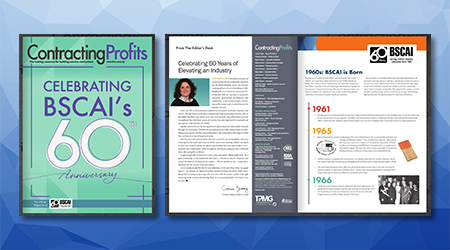
 Celebrating BSCAI's 60th Anniversary eBook
 Recognizing the 2026 Reader Choice Award Winners
 2026 Emerging Leader Award
 How Surfactant Use is Expanding in Commercial Cleaning
 Boost Cleaning Efficiency and Sustainability in Just 40 Minutes
 Case Studies & White Papers
Case studies & white papers for the cleaning professional
Restroom Care: Three No-Flush Urinals Save Facility $600,000
The big benefit of installing waterless urinals is their huge water savings. Many of the approximately nine million urinals in the United States still use about three gallons of water per flush (gpf). And even though newer models use just one gpf, that is still a hefty amount of water.
In fact, in a small office building with 25 men working 260 days per year, it is estimated that more than 40,000 gallons of water could be saved each year per urinal if an older three gpf urinal is replaced with a waterless system. And as much as 20,000 gallons can be saved annually if the waterless system replaces a new one gpf urinal.
And saving water is not only good for the planet but can be good for the pocketbook as well. Case in point: the Glen Canyon Dam Visitors Center in Page, Ariz.
In 2003, the center was planning to build a $600,000 on-site water-treatment facility to expand the current sewage system. However, just by installing three No-Flush™ urinals from Waterless Co., the center was able to save an estimated 225,000 gallons of potable (drinkable) water per year. The amount was so significant that the $600,000 treatment expansion was no longer needed.
And the center found that not only was water — and money — saved but the urinals were more sanitary as well. Bacteria need a moist surface in order to grow. Because Waterless systems stay dry, they are inhospitable to bacteria, and because of this, users at the Center reported less urine smell in the restrooms.