
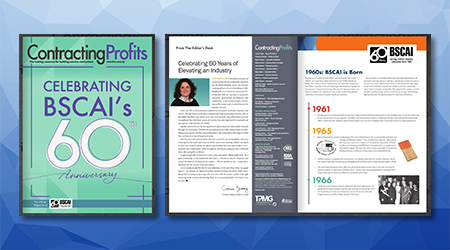
 Celebrating BSCAI's 60th Anniversary eBook
 Recognizing the 2026 Reader Choice Award Winners
 2026 Emerging Leader Award
 How Surfactant Use is Expanding in Commercial Cleaning
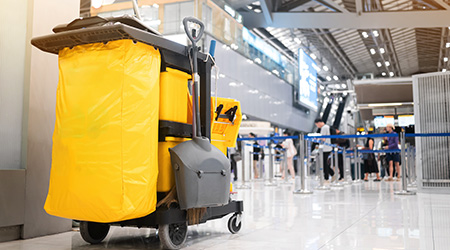 Boost Cleaning Efficiency and Sustainability in Just 40 Minutes
 Case Studies & White Papers
Case studies & white papers for the cleaning professional
Vacuums: Cleaning Employees Earn Higher Wages Using Backpack Vacuums and Team Cleaning
Marcis & Associates currently employs 425 cleaning professionals throughout Texas and Louisiana. The company cleans a whopping 7.3 million square feet in 49 buildings each day, a majority of which are at the University of Texas M.D. Anderson Cancer Center and the Health Science Center. Going from research labs to patient care areas to offices and to classrooms posed a very diverse range of cleaning challenges, not only from a productivity standpoint but from a green cleaning perspective.
After weighing their options, the company decided to implement Team Cleaning using ProTeam backpack vacuums. Along with improved cleanliness and productivity, the most noticeable results have been higher morale and the heavier wallets of his staff.
According to Julio Cisneros the company is constantly looking for better, safer and more effective ways to enhance the quality of service to patients, students, visitors and his own staff. Not only does he see the need for it, but his clients ask for it as well. In response to their requests, Marcis and Associates is transitioning to green cleaning products and they have trained their staff on Team Cleaning for three of their contracts.
Before the switch to backpack vacuums, operators were outfitted with standard clunky uprights with no attachments. They had used backpack vacuums from other manufacturers before, but the staff did not like them because they were too heavy and bulky.
“We are extremely happy with the ProTeam Super CoachVac vacuums that we bought in the summer of 2007,” Cisneros said. “The employees like the light weight and easy handling of the machine, and the women love them especially because of the easy access to attachments for doing detail work and high dusting.”
Team Cleaning focuses on training and features individual specialists who, by type of duty, systematically follow each other while performing a specific set of tasks and spot checking one another. All members are cross trained on each cleaning task, but specialization helps cater to each person’s strengths.
Cisneros was introduced to the concept of Team Cleaning back in 2004 at the ISSA trade show. It took three years of information gathering and an impactful one-day training seminar with Jim Harris of Concepts IV, an official Team Cleaning trainer, to set the wheels in motion.
“It took us about a year to begin the process of going to OS1/Team Cleaning, but since then we have sent six managers to Salt Lake City for training.”
From a cleanliness standpoint, Marcis & Associates clients have commented on the improved air quality, less visible dust and fresher smelling air in their buildings. By using and consistently updating cleaning schedules and with a quality assurance process in place, the results have been documentable as well.
Trained staff has become so much more productive that the company has been able to pay significantly higher hourly wages – over $1.00 more than minimum wage - than their competitors. Not only that, but they were able to quickly pay off the cost of the backpack vacuums and other cleaning equipment.
“There was a huge amount of savings,” Cisneros explained. “When we started the program we were paying the minimum wage of $5.15 an hour. We had promised the employees to stay with us and learn the OS1/Team Cleaning and they would reap the benefits. After implementation, we increased their starting wage to $6.50 an hour and we were able to pay off the equipment in two months. Now that the minimum wage increased to $5.85 an hour, we increased their wages to $6.90 an hour. Our turnover has decreased tremendously at the campuses, too. Having high staff morale is worth every penny.”