
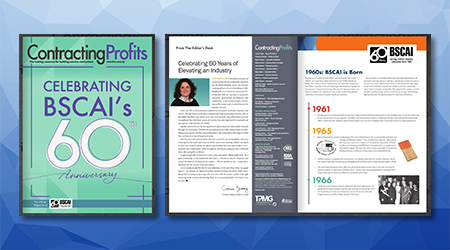
 Celebrating BSCAI's 60th Anniversary eBook
 Recognizing the 2026 Reader Choice Award Winners
 2026 Emerging Leader Award
 How Surfactant Use is Expanding in Commercial Cleaning
 Boost Cleaning Efficiency and Sustainability in Just 40 Minutes


By Gary A. Penrod
Like the building services industry itself, the mergers and acquisitions sector has evolved, grown, and gained significant sophistication since its infancy 60 years ago. Gone are the days when transactions completed resulted in failure for both the buyer and the seller. Yet several of those failed transactions had the determination and fortitude to rise from the ashes and create new, even more successful companies.
The building service industry remains viable because it is recession resistant, offering the would-be entrepreneur exit opportunity through acquisition for the shareholder as they choose to move on to other ventures.
The industry’s sustainability has caught the attention of investors through its viability, low capex, recurring monthly revenue, and its recession and calamity resistance. Strategic buyers already know about the attributes of the industry and may look at the acquisition of other companies as a way to enter new market areas and market sectors.
Unlike the early acquisition efforts, most transactions today are done properly, meeting the goals and expectations of the buyer and the seller.
Considering ease of entry and comparatively low initial investment, the industry offers entrepreneurs a significant return on that investment to those diligent in their effort to build and operate their company. Opportunity abounds for those that operate a company well, and that think strategically about appropriate growth while preparing the company for its eventual acquisition, whether it be 10, 20, or 30 years after its inception.
The return on investment compared to other industries is relatively high. As with other entrepreneurial efforts, there is risk; however, history shows that the risk for the building services industry is far less than some other industries. There are certain aspects of how a company operates that influence its eventual market valuation. They include:
• Strong, consistent earnings over the long term.
• Gross revenue above $10 million. However, history shows that even smaller companies can sell well.
• Consistent annual growth of eight to 10 percent, not including expansion of existing contracts.
• Industry favored market sectors. Good companies can sell well, regardless of the market sector.
• Proven professional management.
• Having low customer concentration.
• High customer retention.
• Operating in a market area with opportunity.
• Having a good reputation among customers, competitors, and the industry at large.
A well operated business with attributes that prospective buyers deem valuable can be sold well. The history of the building services industry has shown that and continues to show it. While any acquisition has some risk, that risk is mitigated by devoting attention to detail and sound financial, legal, and advisory assistance.
As the industry continues to evolve, there is little doubt that it will remain a viable industry for the entrepreneur and investor groups well into the future.
Gary A. Penrod is a long-time building services industry leader, author and speaker, having founded and operated a successful service company. After that company’s divestiture, he founded Gary Penrod and Associates, Inc (GPA), an industry-specific M&A intermediary group, having exclusive focus in the building services industry. GPA continues to serve the industry, having successfully assisted many firms with their divestiture process in the USA, Canada and the Caribbean.
Penrod is a former BSCAI Board Member and President.
posted on 6/19/2026
